How to Automate Agent Payouts for Small Brokerages

Automated commission management is defined as software-driven processing of agent splits, referral fees, and co-op payments without manual calculation. Small brokerages that automate agent payouts small brokerage operations report saving over 35% of transaction admin time after adopting purpose-built tools. That time savings translates directly into fewer errors, faster closings, and agents who trust the numbers they receive. Brokerpay is built specifically for this problem, handling RESPA-compliant commission processing so brokers stop relying on Venmo and Zelle workarounds that create federal liability.
What does it take to automate agent payouts in a small brokerage?
Brokerage commission automation starts with clean transaction data. If your closing records live in spreadsheets or paper files, no software will fix the underlying problem. You need a single source of truth for transaction details before any automation tool can calculate splits accurately.
Three core requirements must be in place before you configure any payout workflow:
- Accurate transaction records. Every closing must include the sale price, gross commission, and each agent’s agreed split percentage before the software can calculate a payout.
- Accounting software integration. Tools like QuickBooks connect commission software to your general ledger, so every payout posts automatically without double entry.
- Payee verification and tax documentation. Payee verification, tax form automation, and audit trails are standard compliance requirements even for small brokerages. Collecting W-9s and verifying agent identities before the first automated payout prevents IRS issues later.
Entry-level tools vs. enterprise platforms
The right tool depends on your split complexity, not just your transaction volume. Automation decisions should focus on split complexity over volume. A brokerage running 15 closings a month with multi-tier caps and referral splits needs a more configurable rules engine than one running 30 simple 50/50 splits.
Entry-level small brokerage software handles standard splits and integrates with QuickBooks at a price point accessible to independent offices. Enterprise platforms add features like multi-office reporting, advanced API access, and custom workflows. Those features add maintenance overhead that small teams rarely need.
| Brokerage profile | Recommended tool type | Key feature needed |
|---|---|---|
| Under 20 closings/month, simple splits | Entry-level commission tool | QuickBooks sync, basic split rules |
| Under 20 closings/month, complex caps | Mid-tier configurable platform | Rules engine, cap tracking |
| 20+ closings/month, multiple agents | Full commission management suite | Audit trails, agent self-service portal |
| Any size, co-op and referral fees | Compliant payout platform (e.g., Brokerpay) | RESPA documentation, payee verification |
Pro Tip: Before selecting any tool, map every split scenario your brokerage runs. Count the number of distinct commission structures. If you have more than three, prioritize a configurable rules engine over a low price point.
How to set up automated agent payout workflows
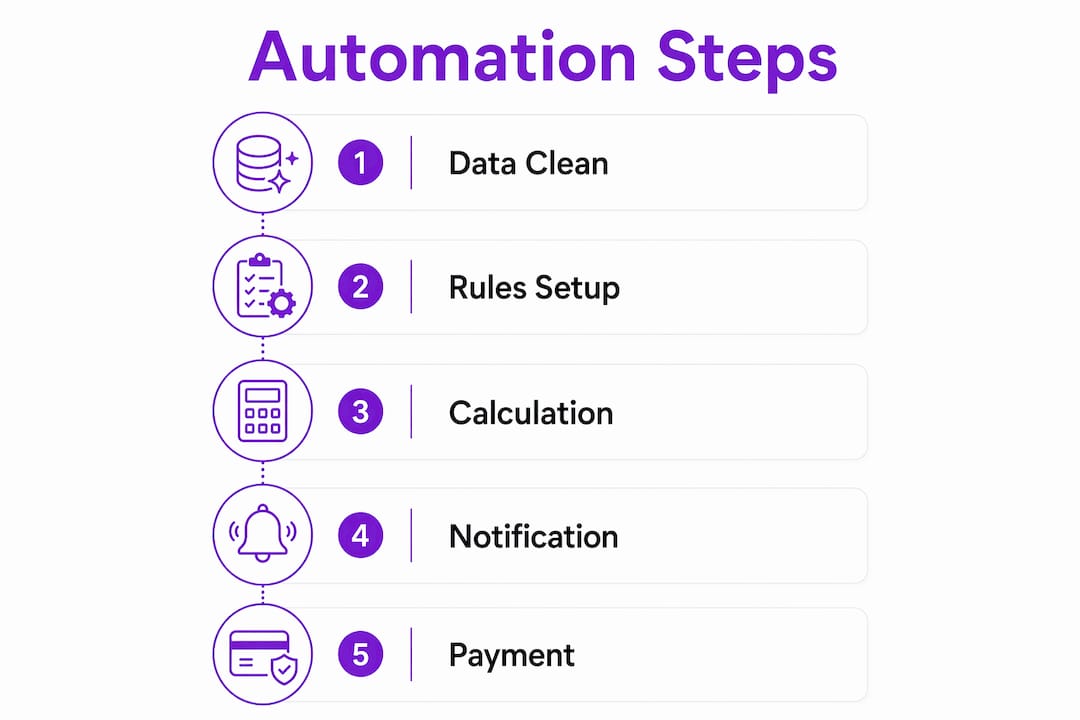
Setting up agent commission processing automation follows a clear sequence. Skipping steps, especially testing, is the most common reason brokers revert to spreadsheets after two months.
-
Install and configure your commission management software. Enter each agent’s split agreement, cap structure, and referral arrangements. Most platforms use a template per agent that auto-populates when a new transaction is entered.
-
Connect to your accounting system. Link the commission tool to QuickBooks or your preferred ledger software. This connection means every approved payout creates a corresponding journal entry automatically. Manual admins spending 45+ minutes per closing on splits and notifications eliminate nearly all that overhead once this integration is live.
-
Configure automated agent notifications. Set up email or SMS alerts that fire when a payout is calculated and again when it is approved. Agents should never have to call the office to ask when their check is coming.
-
Set up approval workflows. Define who reviews each payout before it releases. For most small brokerages, this is a single broker-owner approval step. The software holds the payout until the approver clicks confirm.
-
Run parallel testing before going live. Process five to ten historical closings through the new system and compare the outputs to your old manual calculations. Discrepancies at this stage are easy to fix. Discrepancies discovered after agents are paid are not.
-
Go live and monitor the first three closings closely. Watch for split calculation errors, missed notifications, and accounting sync failures. Most issues surface in the first week.
Pro Tip: Set your notification triggers to fire at two points: when the payout is calculated and when it is released. Agents who receive both updates ask far fewer follow-up questions, which cuts your admin interruptions significantly.
Platforms that automate commission calculation and integrate with QuickBooks reduce both labor hours and calculation errors from the first month of use. The key is completing the full setup sequence rather than stopping at step two and manually handling the rest.

Common mistakes when automating payouts and how to avoid them
The biggest mistake small brokerages make is selecting an enterprise-grade platform for a low-volume operation. Small brokerages under 20 transactions per month should use simplicity-first tools integrated with QuickBooks rather than complex enterprise software. The maintenance burden of an overpowered platform consumes the time you were trying to save.
Four other mistakes appear repeatedly when brokers first attempt payout automation:
- Skipping agent notifications. Automated SMS and email payout updates reduce agent inquiries significantly. Brokers who automate calculations but not communications still field the same volume of “where’s my check?” calls.
- Misconfiguring split rules. A single incorrect percentage in an agent’s template compounds across every closing. Audit each agent’s configuration against their signed agreement before the first live payout.
- Ignoring tax compliance steps. Failing to collect W-9s or automate 1099 generation creates year-end problems. Build tax form automation into the setup process from day one.
- Launching without an audit trail. Every payout decision should be logged with a timestamp, an approver name, and the calculation inputs. This documentation protects the brokerage in a dispute or regulatory review.
Incremental rollout works better than a full cutover. Run your new system in parallel with your existing process for the first month. This gives your team time to learn the tool without the risk of a missed payout.
Pro Tip: Train every staff member who touches transactions before going live, not after. A 30-minute walkthrough prevents 90% of the configuration errors that surface in the first two weeks.
How automation improves accuracy, agent satisfaction, and growth
Automated payout solutions reduce commission calculation errors at the source. Manual split calculations depend on whoever is doing the math that day. Automated rules engines apply the same logic every time, regardless of who entered the transaction.
Automated payouts decrease commission disputes and improve agent trust. That trust matters more than most broker-owners realize. Agents who feel confident in their payout accuracy are less likely to leave for a competing office. Retention is a direct financial benefit of getting commissions right.
Automation also handles complexity that manual processes cannot scale. Multi-tier cap structures, referral splits, and co-op payments each require separate calculations. A rules engine handles all three simultaneously without additional staff time. As your brokerage grows, the system grows with it without adding administrative headcount.
Accurate record-keeping supports brokerage growth in a less obvious way. Clean audit trails and documented compliance workflows make it easier to bring on new agents, pass a regulatory review, or qualify for certain lender relationships. Brokers who switch from manual to automated payouts report that the compliance documentation alone justifies the investment.
Key takeaways
Automating agent payouts in a small real estate brokerage requires clean transaction data, a configurable rules engine, accounting software integration, and automated agent notifications working together from day one.
| Point | Details |
|---|---|
| Start with clean data | Accurate transaction records are the foundation of any automated payout system. |
| Match tool complexity to your splits | Choose entry-level software for simple splits and configurable platforms for multi-tier caps. |
| Automate agent notifications | Email and SMS payout alerts reduce agent inquiries and build trust in the process. |
| Build compliance in from the start | Collect W-9s, automate 1099 generation, and log every payout with a full audit trail. |
| Test before going live | Run five to ten historical closings through the new system before processing live transactions. |
What I’ve learned about automation that most guides skip
Most articles on payout automation focus on features. The real decision is simpler than that. Pick the tool your least tech-savvy staff member can use without calling support.
I’ve watched broker-owners spend weeks evaluating platforms with advanced API access and custom reporting dashboards. Then they go live, the office manager can’t figure out how to add a new agent, and the whole thing gets abandoned by month two. The tool that gets used is the tool that wins.
The second thing most guides miss is the communication piece. Automation is not just about calculating the right number. It is about making sure the agent knows the right number, knows when it is coming, and does not have to ask. That last part is where most brokerages still fail even after they automate. They fix the math but leave the communication manual.
My honest advice for any small brokerage: start with the simplest tool that handles your specific split structures, connect it to QuickBooks on day one, and turn on every notification feature available. Do not add complexity until you have outgrown the simple version. Most brokerages under 30 agents never do.
The compliance angle is also underrated. Using Venmo or Zelle for agent payouts is not just inconvenient. It creates real federal liability under RESPA. A purpose-built platform like Brokerpay documents every transaction in a way that a Venmo screenshot never will. That documentation is worth more than any feature on a comparison chart.
— Wes
Brokerpay handles the payout process your brokerage needs
Small brokerages that are ready to move beyond spreadsheets and Venmo workarounds have a direct path forward with Brokerpay.
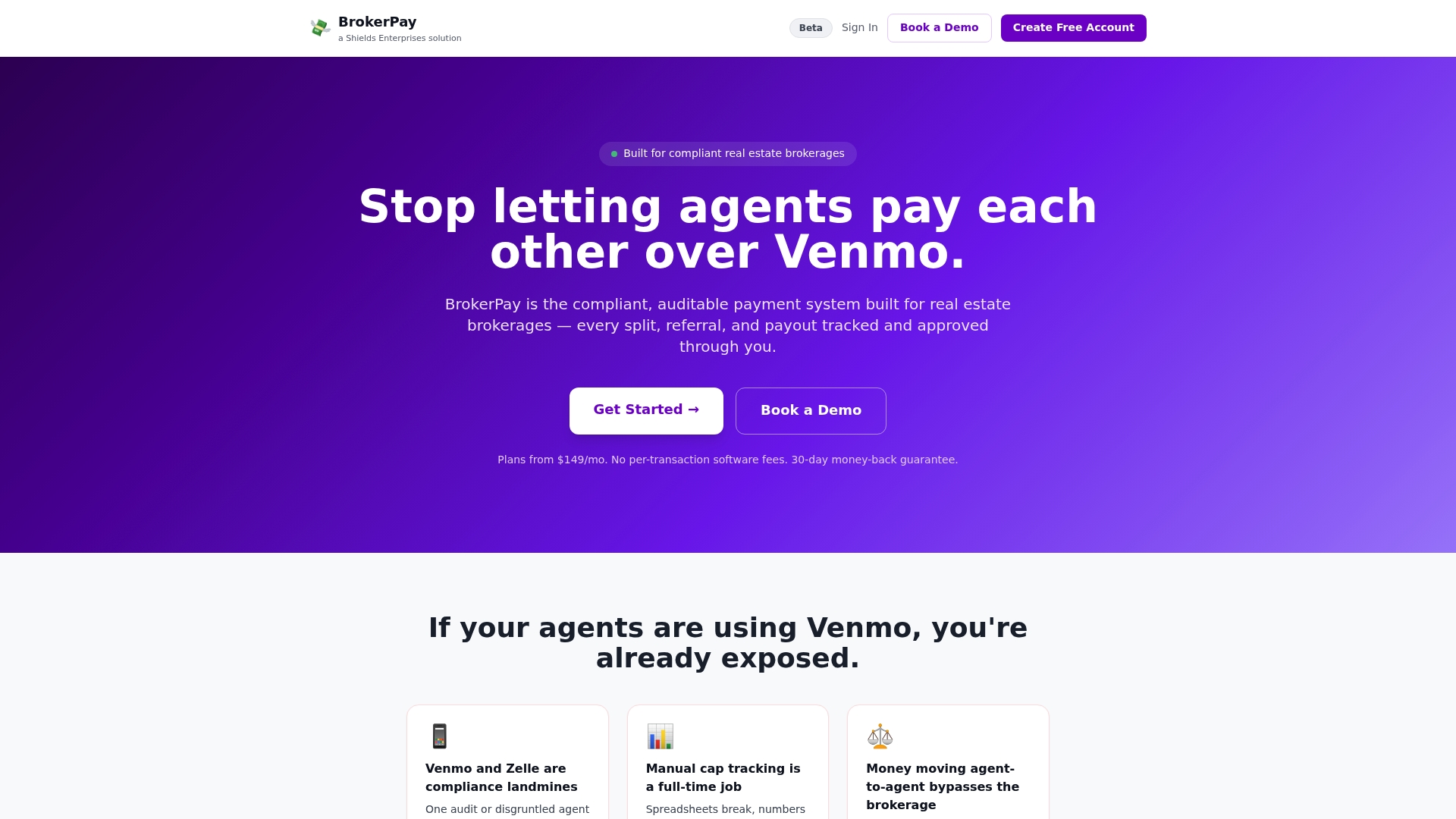
Brokerpay is a compliant commission payment platform built for real estate brokerages. It tracks agent splits, referral fees, and co-op commissions while keeping every transaction RESPA-compliant and fully documented. The platform connects with common accounting software and sends automated agent notifications so your team stops fielding payout questions. For brokerages that need a real estate payment gateway that handles compliance from the first closing, Brokerpay is the direct solution. Visit Brokerpay to see how it works for your office.
FAQ
What does it mean to automate agent payouts?
Automating agent payouts means using software to calculate commission splits, generate payout amounts, and notify agents automatically after each closing. The process replaces manual spreadsheet calculations and eliminates the need for Venmo or Zelle workarounds.
How much admin time can automation save a small brokerage?
Commission management software reduces administrative time by over 35% for small brokerages. Brokers who previously spent 45 or more minutes per closing on splits and notifications eliminate most of that overhead once automation is live.
What software does a small brokerage need to automate payouts?
A small brokerage needs commission management software with a configurable rules engine and a direct integration with QuickBooks or a comparable accounting platform. Brokerpay adds RESPA-compliant documentation and payee verification on top of standard commission processing.
How do I avoid compliance problems when automating payouts?
Collect W-9s from every agent before the first automated payout, automate 1099 generation at year-end, and confirm your platform logs every payout with a timestamp and approver record. Payee verification and audit trails are standard compliance requirements that prevent IRS and regulatory issues.
Can a brokerage with fewer than 20 closings per month benefit from automation?
Yes. Even low-volume brokerages benefit from automation when they have complex split structures, referral fees, or co-op payments. The key is selecting a simplicity-first tool rather than an enterprise platform, which adds overhead that outweighs the efficiency gains at low transaction volumes.