Why Brokerage Payment Errors Cause Compliance Issues

Brokerage payment errors are a direct cause of compliance failures because they expose gaps in operational controls, record-keeping, and regulatory obligations that enforcement agencies actively target. Real estate brokerages face a specific version of this risk: every miscalculated agent split, undocumented referral fee, or informal Venmo transfer creates a paper trail problem that regulators treat as a control failure, not a clerical mistake. The Financial Conduct Authority, FINRA, the IRS, and the SEC have all sharpened their focus on payment processing compliance issues in 2026. Understanding why brokerage payment errors cause compliance issues is the first step toward building controls that hold up under scrutiny.
Why brokerage payment errors cause compliance issues
Payment errors breach “books and records” obligations, which are the foundational record-keeping requirements that regulators use to assess whether a firm controls its own operations. When a commission is miscalculated or paid through an undocumented channel, the firm cannot produce a clean audit trail. Regulators do not distinguish between an honest mistake and a systemic failure. Both produce the same result: an incomplete evidence trail that counts as a control gap.
The compliance failures triggered by payment errors fall into several distinct categories:
- Tax withholding errors. Incorrect tax withholding on commissions triggers IRS compliance errors even when the total payment amount is accurate. A brokerage can pay the right dollar figure to the wrong tax classification and still face an audit.
- Segregation account breaches. Mixing client funds with operating funds, even temporarily, violates fiduciary rules. Segregation account breaches caused 62% of active enforcement cases in 2026.
- RESPA violations. Undocumented referral fees or co-op commissions paid outside a compliant platform create federal liability under the Real Estate Settlement Procedures Act.
- Supervisory record failures. Regulators expect firms to show that someone reviewed and challenged payment data. A missing review record is itself a violation.
Brokerage-specific regulatory investigations rose 34% year-over-year in 2026. That increase signals a regulatory environment where payment processing compliance issues are no longer treated as low-priority operational matters.
How do manual processes increase brokerage compliance risk?
Manual payment processes are the most common source of brokerage compliance challenges, and the numbers confirm it. Over 70% of firms rely on spreadsheets to manage complex commission payments. Spreadsheets produce the highest rate of human-error-related payouts and contribute to global revenue leakage estimated between 9% and 20%. That is not a minor inefficiency. It is a structural vulnerability.

The deeper problem is data integrity. Manual spreadsheets disconnect CRM deal data from commission calculations, creating a gap between what the system of record shows and what actually gets paid. When a compliance officer or regulator asks for documentation, the spreadsheet version and the CRM version tell different stories. That discrepancy is a red flag, regardless of whether the final payment was correct.
Three specific failure patterns emerge consistently in manual environments:
- Ownership ambiguity. No single person owns the accuracy of the payment data. When errors surface, responsibility is unclear, and regulators treat that ambiguity as a control failure.
- No version control. Spreadsheets get overwritten. Prior payment periods cannot be locked. Reconstructing an audit trail after the fact is unreliable.
- Fragmented approvals. Payments move through email threads and text messages instead of documented workflows. There is no evidence that a second set of eyes reviewed the calculation.
Pro Tip: Assign a named data owner for every commission payment cycle. Document that ownership in writing. Regulators treat undocumented ownership as no ownership at all.
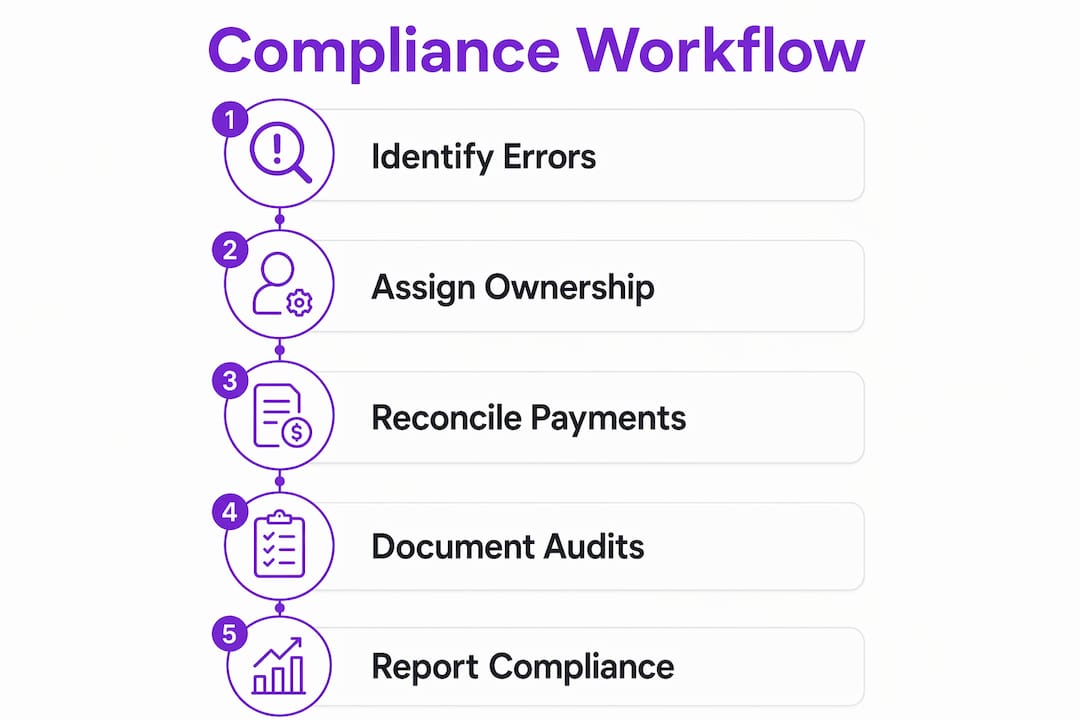
Payment reconciliation is widely mischaracterized as an accounting task. It is actually a data-integrity and CRM synchronization problem. Treating it as accounting means the wrong team owns it, and the compliance function never gets the evidence it needs.
How have regulatory expectations shifted in 2026?
Regulators have moved from checkbox compliance to expecting documented, independent challenge of internal payment processes. The FCA’s enforcement data shows that withdrawal delays beyond 5 business days triggered 14 major investigations in 2026, with total fines exceeding $2.2 billion for supervisory failures. That figure reflects a deliberate enforcement posture, not random sampling.
FINRA and the SEC have reinforced the same standard. Regulators now expect meaningful investigation and analysis of flagged payments, not just automated alerts. An automated system that flags an error but produces no documented human review satisfies neither FINRA nor the SEC. The evidence trail must show that a compliance professional looked at the flag, assessed it, and made a recorded decision.
“Firms face risk when they cannot produce evidence that second-line compliance reviewed first-line operational data quality. Absence of documented ownership counts as a control failure, regardless of whether payments were eventually corrected.”
The Senior Managers Regime, which assigns personal accountability to named individuals for compliance failures, raises the stakes further. Under this framework, a compliance officer who cannot demonstrate active supervision of payment processes faces personal liability, not just organizational fines.
| Regulatory body | Key focus area | Consequence of payment errors |
|---|---|---|
| FCA | Segregation account integrity and withdrawal timing | Investigations, fines exceeding $2.2 billion in 2026 |
| FINRA | Documented supervisory challenge and evidence trails | Enforcement actions for supervisory failures |
| IRS | Tax withholding accuracy on commission payments | Audit triggers even when payment totals are correct |
| SEC | Meaningful analysis of flagged payment data | Penalties for automated-only compliance without human review |
2026 marks a critical year for supervisory framework rewrites. Firms relying on legacy manual systems face heightened risk of “compliance drift,” where controls that once passed inspection no longer meet current standards.
What are the operational costs beyond regulatory penalties?
Regulatory fines are the visible cost of payment errors. The hidden costs are often larger and harder to recover from. Repeated commission errors erode trust between agents and brokers, shifting relationships from high-trust partnerships to high-maintenance oversight. That shift has a direct operational cost.
Agents who do not trust their commission calculations start doing their own math. This is the “trust tax”: agents build shadow accounting systems, cross-check every payment, and escalate disputes that consume management time. The brokerage error implications extend well beyond the finance team.
The operational impact compounds in several ways:
- Increased administrative overhead. Every disputed payment requires manual investigation, documentation, and resolution. That workload falls on compliance officers and sales managers simultaneously.
- Retention risk. High-performing agents leave brokerages where payment accuracy is unreliable. Replacing a top producer costs far more than fixing the payment process.
- Regulatory distraction. When compliance teams spend time resolving payment disputes, they have less capacity for proactive supervision. That creates secondary compliance gaps.
Pro Tip: Track the number of agent-initiated payment disputes per quarter. A rising dispute rate is an early warning signal for both trust erosion and compliance exposure, often before a regulator notices.
Shadow costs of payment errors include regulatory distraction and increased manual workloads, which are consistently underestimated compared to direct financial loss. A brokerage that calculates only the fine amount misses the full picture of why compliance matters in brokerage operations.
What steps reduce payment errors and strengthen compliance?
The path from manual processes to compliant payment operations follows a clear sequence. Each step reduces both error frequency and regulatory exposure.
- Assign documented data ownership. Name a specific person responsible for payment data accuracy at each stage of the commission cycle. Document that assignment in your compliance policy. Regulators look for this evidence first.
- Replace spreadsheets with a dedicated payment platform. Transitioning to specialized commission payment platforms reduces errors, strengthens audit trails, and saves administrative time. Automation provides contract-grade data validation and locks past payment periods against retroactive changes.
- Implement exception workflows. Every flagged payment should trigger a documented review process with a named reviewer and a recorded outcome. Automated flags without human review do not satisfy FINRA or SEC standards.
- Conduct regular reconciliations. Monthly reconciliations between CRM deal data and commission payment records catch data integrity gaps before they become audit findings.
- Build independent second-line reviews. Compliance officers should review payment data independently from the operations team that processes it. Documented independent challenge is the specific evidence regulators now require.
- Eliminate informal payment channels. Venmo, Zelle, and similar consumer apps create federal liability under RESPA. Every payment must flow through a documented, compliant channel. Brokerpay is built specifically to enforce this requirement, tracking agent splits, referral fees, and co-op commissions with a complete audit trail.
Platforms like Brokerpay address the full compliance workflow for real estate payments, from commission calculation through documented disbursement, in a single system. That integration eliminates the CRM-to-spreadsheet gap that produces most audit trail failures.
Key Takeaways
Brokerage payment errors cause compliance issues because they create evidence gaps that regulators treat as control failures, regardless of whether the underlying payment was eventually corrected.
| Point | Details |
|---|---|
| Payment errors are control failures | Regulators treat missing audit trails as systemic failures, not clerical mistakes. |
| Manual spreadsheets drive most errors | Over 70% of firms use spreadsheets for commissions, producing the highest rate of human-error payouts. |
| Regulatory enforcement is rising | Brokerage investigations rose 34% in 2026, with fines exceeding $2.2 billion for supervisory failures. |
| Trust erosion compounds the cost | Repeated errors create a “trust tax” that increases administrative overhead and drives agent turnover. |
| Automation with documented oversight is the fix | Dedicated platforms like Brokerpay enforce audit trails and eliminate informal payment channels. |
The compliance problem hiding in plain sight
I have seen the same pattern repeat across brokerages of every size. The compliance officer believes the payment process is under control because no one has complained loudly enough. The operations team believes the spreadsheet is accurate because the totals reconcile. Neither assumption holds up when a regulator asks for the evidence trail.
The uncomfortable truth is that payment accuracy and payment compliance are two different things. A brokerage can pay every agent the correct amount and still fail a regulatory review because it cannot prove who reviewed the calculation, when, and with what authority. That distinction is not a technicality. It is the entire basis of modern supervisory expectations.
What I find most underestimated is the personal accountability dimension. Under the Senior Managers Regime, compliance officers are not just organizational representatives. They are named individuals with documented responsibilities. When payment controls fail, the question regulators ask is not “what did the firm do?” It is “what did you do, and where is the evidence?”
The brokerages that get this right are not necessarily the ones with the most sophisticated technology. They are the ones that treat payment reconciliation as a compliance function, assign clear ownership, and document every review. Automation helps enormously, but it only works when a human being is accountable for what the system produces. That combination, documented ownership plus automated controls, is the only configuration that satisfies current regulatory expectations.
— Wes
Brokerpay: built for compliant brokerage payments
Real estate brokerages that rely on informal payment methods or manual spreadsheets carry compliance exposure that grows with every transaction.
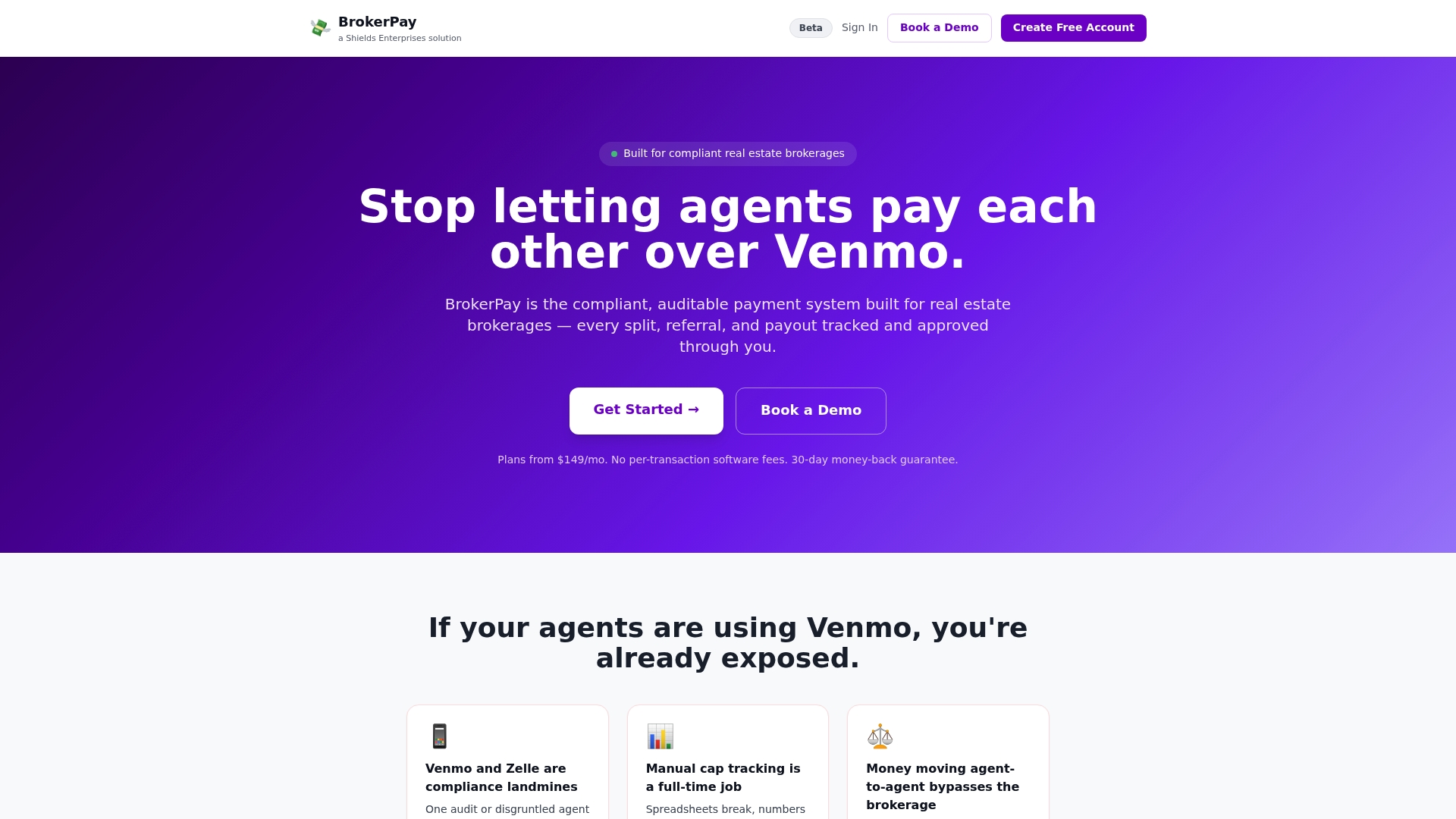
Brokerpay automates commission payments with built-in compliance controls, eliminating the manual reconciliation gaps that trigger regulatory investigations. The platform tracks agent splits, referral fees, and co-op commissions in a single documented system, replacing Venmo and Zelle workarounds that create federal liability under RESPA. Every payment produces a complete audit trail that satisfies FCA, FINRA, and IRS evidence requirements. Compliance officers get the documented independent review records they need. Agents get accurate, on-time payments. Learn how automated payouts reduce errors and what that means for your brokerage’s regulatory standing.
FAQ
What makes a payment error a compliance violation?
A payment error becomes a compliance violation when it produces an incomplete or inaccurate audit trail. Regulators treat missing documentation as a control failure, regardless of whether the payment was eventually corrected.
Why do spreadsheets create compliance risk for brokerages?
Spreadsheets disconnect CRM deal data from commission calculations and cannot lock prior payment periods. That gap makes it impossible to produce a reliable audit trail, which is the core evidence requirement for FINRA, the FCA, and the IRS.
How does RESPA apply to brokerage commission payments?
RESPA requires that referral fees and co-op commissions be documented and paid through compliant channels. Payments made via consumer apps like Venmo or Zelle lack the required documentation and create federal liability for the brokerage.
What does “documented independent challenge” mean for compliance officers?
Documented independent challenge means a compliance officer reviewed payment data separately from the operations team, assessed any flagged items, and recorded that review. Automated alerts without a human review record do not satisfy current FINRA or SEC standards.
How does Brokerpay reduce compliance risk?
Brokerpay automates commission tracking and disbursement with a complete audit trail, eliminating informal payment channels and manual reconciliation errors. The platform is designed to keep real estate brokerages RESPA-compliant and to produce the supervisory evidence records that regulators now require.